
Spatial Planning and Equitable Benefits of Urban Nature-Based Solutions
Authors
Key Information
Journal
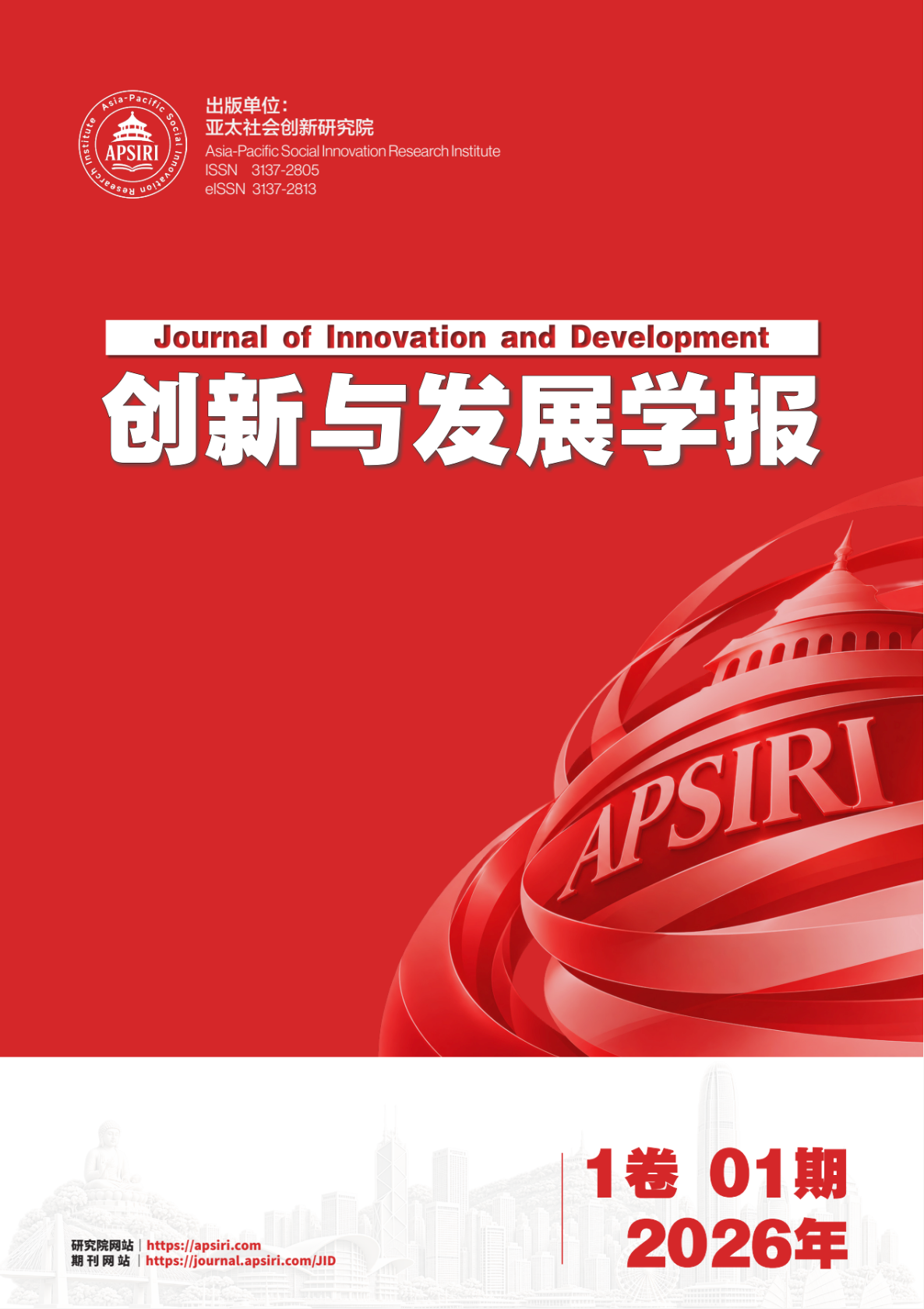
Published in Vol. 1 No. 1 (2026) of Journal of Innovation and Development.
Journal of Innovation and Development is an international, interdisciplinary academic journal published by the Asia-Pacific Social Innovation Research Institute. It is committed to publishing original research of academic value and practical significance in the fields of innovation and development. Open to researchers worldwide, the journal focuses on scientific and technological innovation, engineering, digital applications, industrial upgrading, ecology and sustainable development. It encourages interdisciplinary research and diverse academic perspectives, so as to advance knowledge creation, academic exchange and the dissemination of research findings.
About the JournalAbstract
Urban nature-based solutions can alleviate heat and stormwater pressures through ecological processes, but their planning value also depends on whether services reach residents who need protection. This article synthesizes research on urban cooling, stormwater regulation, and greenspace equity to examine the relationships among ecological functions, spatial connections, and benefit distribution. Cooling and stormwater regulation operate at different spatial scales, requiring multifunctional spaces to be configured according to hydrological connections, vegetation conditions, and residents' activities. Additional green area alone does not adequately represent adaptation outcomes. Exposure, accessibility, and residential stability shape opportunities to benefit. Intervention priorities should combine high risk with service deficits while retaining ecological feasibility and maintenance constraints. Planning around service pathways and incorporating routine maintenance, extreme-event responses, and resident participation can establish traceable connections between ecological improvement and sustained benefits for urban residents.
References
[1] SEDDON N, SMITH A, SMITH P, et al. Getting the message right on nature‐based solutions to climate change[J]. Global Change Biology, 2021, 27(8): 1518-1546. DOI: 10.1111/gcb.15513.
[2] RAYMOND C M, FRANTZESKAKI N, KABISCH N, et al. A framework for assessing and implementing the co-benefits of nature-based solutions in urban areas[J]. Environmental Science & Policy, 2017, 77: 15-24. DOI: 10.1016/j.envsci.2017.07.008.
[3] LI Y, SVENNING J C, ZHOU W, et al. Green spaces provide substantial but unequal urban cooling globally[J]. Nature Communications, 2024, 15(1): 7108. DOI: 10.1038/s41467-024-51355-0.
[4] LI H, ZHAO Y, WANG C, et al. Cooling efficacy of trees across cities is determined by background climate, urban morphology, and tree trait[J]. Communications Earth & Environment, 2024, 5(1): 754. DOI: 10.1038/s43247-024-01908-4.
[5] NEUMANN J, SCHEID C, DITTMER U. Potential of Decentral Nature-Based Solutions for Mitigation of Pluvial Floods in Urban Areas—A Simulation Study Based on 1D/2D Coupled Modeling[J]. Water, 2024, 16(6): 811. DOI: 10.3390/w16060811.
[6] 黄馨, 韩玲, 赵永华, 等. 城市社会-生态系统研究理论基础与分析框架[J]. 生态学报, 2024, 44(15): 6892-6905. DOI: 10.20103/j.stxb.202310232308.
[7] WOLCH J R, BYRNE J, NEWELL J P. Urban green space, public health, and environmental justice: The challenge of making cities ‘just green enough’[J]. Landscape and Urban Planning, 2014, 125: 234-244. DOI: 10.1016/j.landurbplan.2014.01.017.
[8] ANGUELOVSKI I, CONNOLLY J J T, COLE H, et al. Green gentrification in European and North American cities[J]. Nature Communications, 2022, 13(1): 3816. DOI: 10.1038/s41467-022-31572-1.
[9] 徐琳琳, 胡文浩, 徐文辉. 国外基于自然的解决方案(NbS)研究进展[J]. 中国城市林业, 2024, 22(3): 176-183. https://cjournal.hep.com.cn/1672-4925/CN/1179775598677107096.
[10] IUCN. IUCN launches the Second Edition of the IUCN Global Standard for Nature-based Solutions[EB/OL]. (2025-10-10)[2026-10-13]. https://iucn.org/press-release/202510/iucn-launches-second-edition-iucn-global-standard-nature-based-solutionstm.
Details
License
Copyright (c) 2026 雅涵 雷 (作者)

This work is licensed under a Creative Commons Attribution 4.0 International License.